This webpage last updated on 2026-06-23
Last updated: 2026-06-23
Hydroponics
Affiliate Disclosure:
This website includes affiliate links from Amazon, Google, and Awin (Share-a-Sale). Purchases made through these links may generate small commissions, at no extra cost to you, for qualifying clicks or purchases.
Hydroponics Systems I Have Designed, Built and Managed
Spring 2013 - My Initial Rain Tower Build
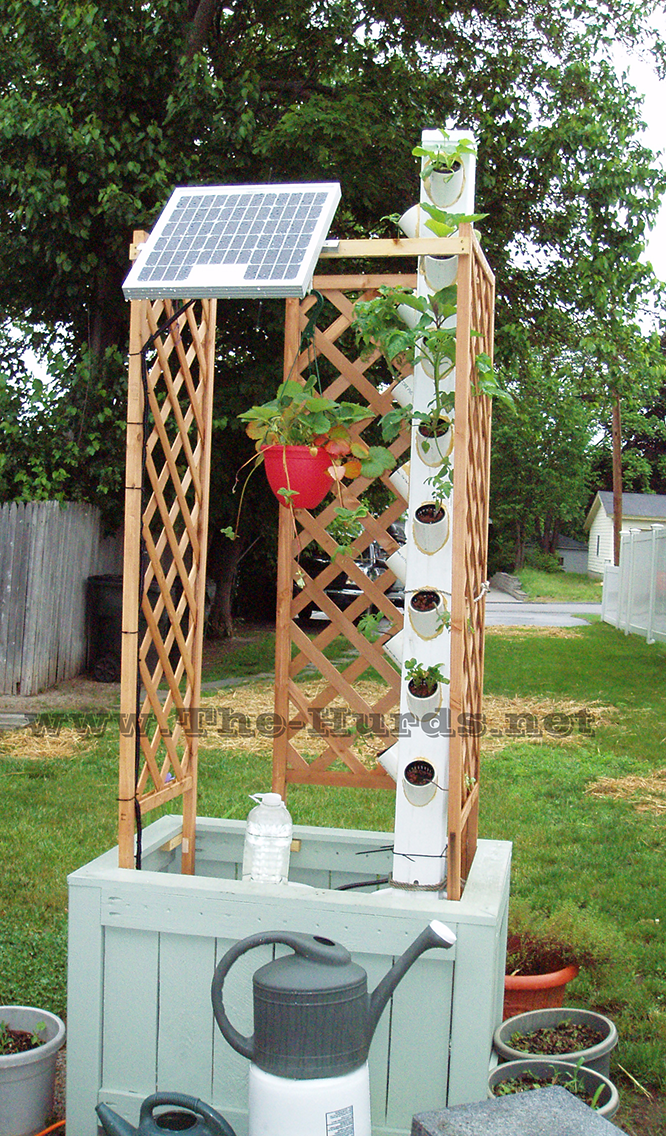
I designed and built this hydroponics rain tower in the Spring of 2013, after seeing several such on various social media platforms. Prior to this I was container-growing vegetables in the backyard of the apartment that I was renting.
This design is based on a 5-gallon bucket for the nutrient solution, with a square hole cut into the lid. This held the vinyl fence post upright, in conjunction with some strategically-placed zipties. Within the bucket, a 12-volt submersible pump from a laser-cooling system was placed in the bottom, with a hose running up the post to an inverted PVC pipe cap, with a hose nipple set in the center of it and a multitude of holes drilled into it, similar to a shower head. This is what rained down ovewr the roots of the plants. A deep-discharge battery was placed inside the wooden planter. The solar panel was the power source, which sent 12-volts DC through a solar charge controller and thus to the Arduino-based microcontroller. The controller was connected to a temperature/humidity controller and a homebrew SD card board with a battery backup and a real-time clock (RTC). The controller determined the pump cycling based upon temperature and humidity and each cycle was datalogged to the SD card for my review of performance. I had also intended on adding battery voltage monitoring, but that did not make the top of my priorities list; I was pleased with the system at this point. Because the Arduino does not have the current-handling capacity to directly power the pump, I placed two relays into my system enclosure (one being a backup, if needed). The only issues that I encountered were insufficient charging power and insufficient capacity using just one bucket.
The issues were addressed later in the growing season by the addition of three more solar panels to the array and plumbing an additional bucket into the first. This also helped with topping-off the water and performing the replenishment of the nutrient solution each weekend, as well as monitoring the PPM of the solution.
The plants in the rain tower, in this photo were from my planted containers, which I was successful in hosing off most of the soil from the roots. There are several different lettuces and a tomatoe plant in this initial test. I did not transfer all my vegetables into the rain tower, to ensure a failure at this stage would not wipe out my entire garden.