This webpage last updated on 2026-08-10
Last updated: 2026-08-10
Ancient Cities Carved from Stone: Were They Connected?
Affiliate Disclosure:
This website includes affiliate links from Amazon, Google, and Awin (Share-a-Sale). Purchases made through these links may generate small commissions, at no extra cost to you, for qualifying clicks or purchases.
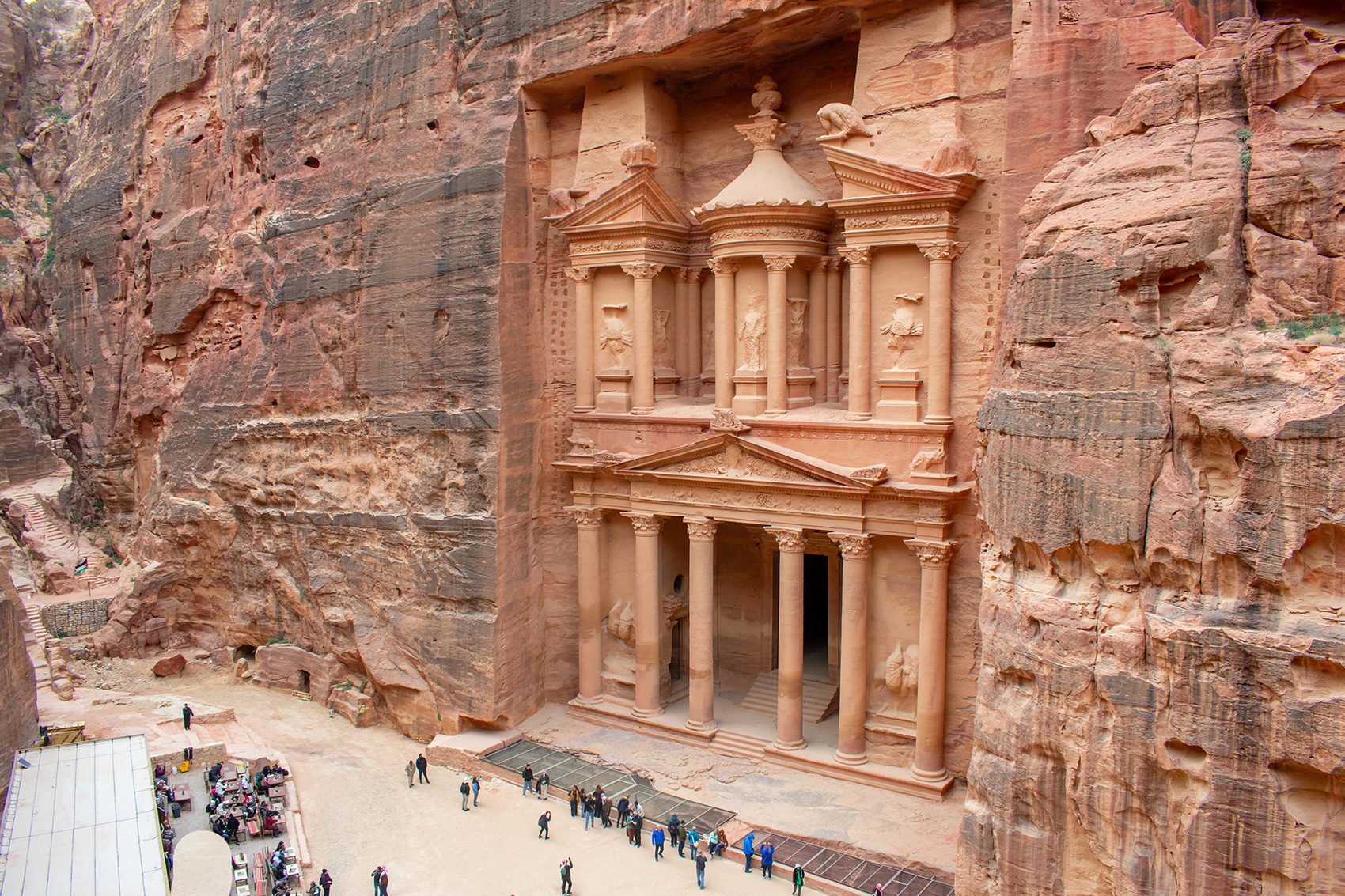
Petra is instantly recognizable. A monumental building seems to emerge directly from a rose-colored sandstone cliff, complete with columns, pediments and elaborate architectural details. But Petra is not alone. Across Egypt, Turkey, Iran, Saudi Arabia, India and Ethiopia are ancient and medieval monuments created not simply by building with stone, but by carving architecture directly into living rock.
Some look so similar that an obvious question follows: were these ancient builders connected? Did architectural ideas travel along the same trade routes as incense, spices, textiles and precious goods? Or did distant civilizations independently discover that a mountain itself could become the raw material for architecture?
The answer is not a simple yes or no. In some cases the connection is certain. In others, cultural exchange is plausible. And in still others, similar-looking monuments were separated by centuries, thousands of miles and entirely different civilizations.
Stock photograph credit: maciekgrabson / DepositPhotos.com
Begin With Petra
Petra was not simply a collection of spectacular tombs in an isolated desert canyon. It became a major Nabataean caravan center positioned between the Red Sea and the Dead Sea, at an important crossroads connecting Arabia, Egypt and Syria-Phoenicia.
Its location matters. Goods moving through the ancient world included Arabian incense, spices from India and luxury goods traveling between distant markets. Along with merchandise came travelers, merchants, craftsmen, artistic fashions and ideas.
Petra's architecture reflects that connected world. Its rock-cut monuments combine indigenous Nabataean traditions with architectural ideas familiar from the Hellenistic world. What appears at first glance to be a mysterious city carved into cliffs was actually part of a remarkably interconnected ancient economy.
Explore Petra as a city at the crossroads of the ancient world
Reference: UNESCO World Heritage Centre — Petra
Petra Has a Remarkable Relative
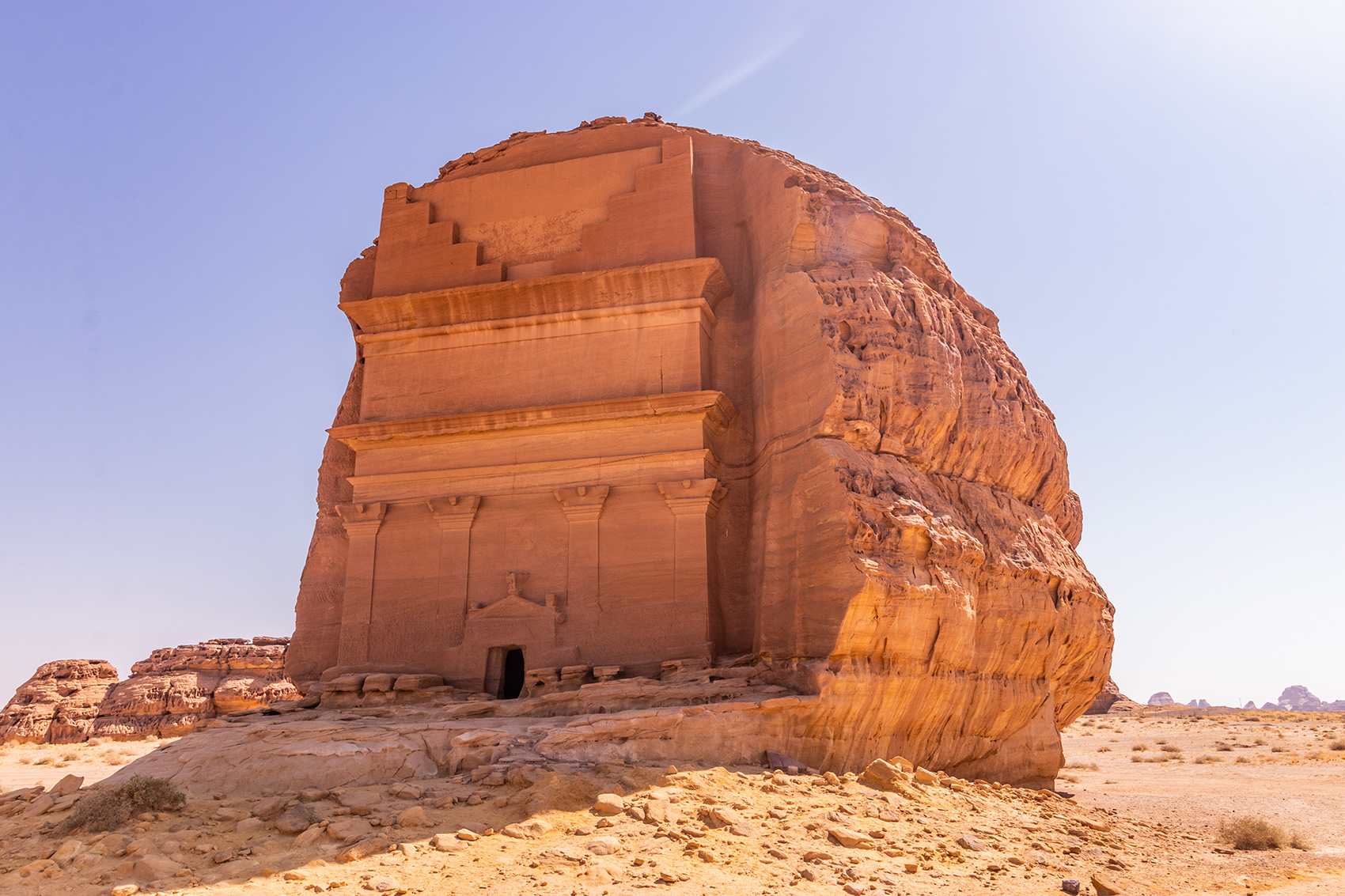
Travel south from Petra into what is now northwestern Saudi Arabia and the resemblance can be startling. Monumental tomb façades appear again, carved directly into isolated sandstone masses and cliff faces.
This time the resemblance is not coincidence.
Hegra, also known as al-Hijr or Mada'in Salih, belonged to the same Nabataean civilization. UNESCO describes it as the largest conserved Nabataean site south of Petra. Its surviving monuments include 111 monumental tombs, 94 with decorated façades.
Many date from the first century BC through the first century AD, placing them within the same broad architectural world as Petra's celebrated monuments.
Petra and Hegra really are architectural relatives. They provide our clearest example in this series of similar rock-cut monuments created within the same civilization.
Compare Petra and Hegra as two cities of the Nabataean world
Reference: UNESCO World Heritage Centre — Hegra Archaeological Site
Stock photograph credit: Mathes / DepositPhotos.com
They May Look Related — But They Span About 2,500 Years
Visual similarity can be deceptive. The famous rock-cut monuments considered in this series were not all created by one ancient culture, nor were they built during one mysterious period of history.
| Approximate Period | Site | Present-Day Location |
|---|---|---|
| 13th century BC | Abu Simbel | Egypt |
| c. 500 BC | Naqsh-e Rostam | Iran |
| 5th–4th centuries BC | Lycian rock tombs | Turkey |
| c. 100 BC–AD 100 | Petra and Hegra | Jordan and Saudi Arabia |
| 2nd century BC–AD 600 | Ajanta | India |
| AD 600–1000 | Ellora | India |
| Medieval Byzantine period | Cappadocian rock churches and settlements | Turkey |
| 12th–13th centuries AD | Lalibela | Ethiopia |
Abu Simbel was already ancient history when Petra's great Nabataean façades were being created. Lalibela, on the other hand, looks extraordinarily ancient to modern eyes but was carved more than a thousand years after Petra's great period.
Stock photograph credit: dbajurin / DepositPhotos.com
Petra Did Not Invent the Idea
More than a thousand years before Petra's most famous façades, Egyptian builders were cutting the enormous temples of Abu Simbel directly into sandstone.
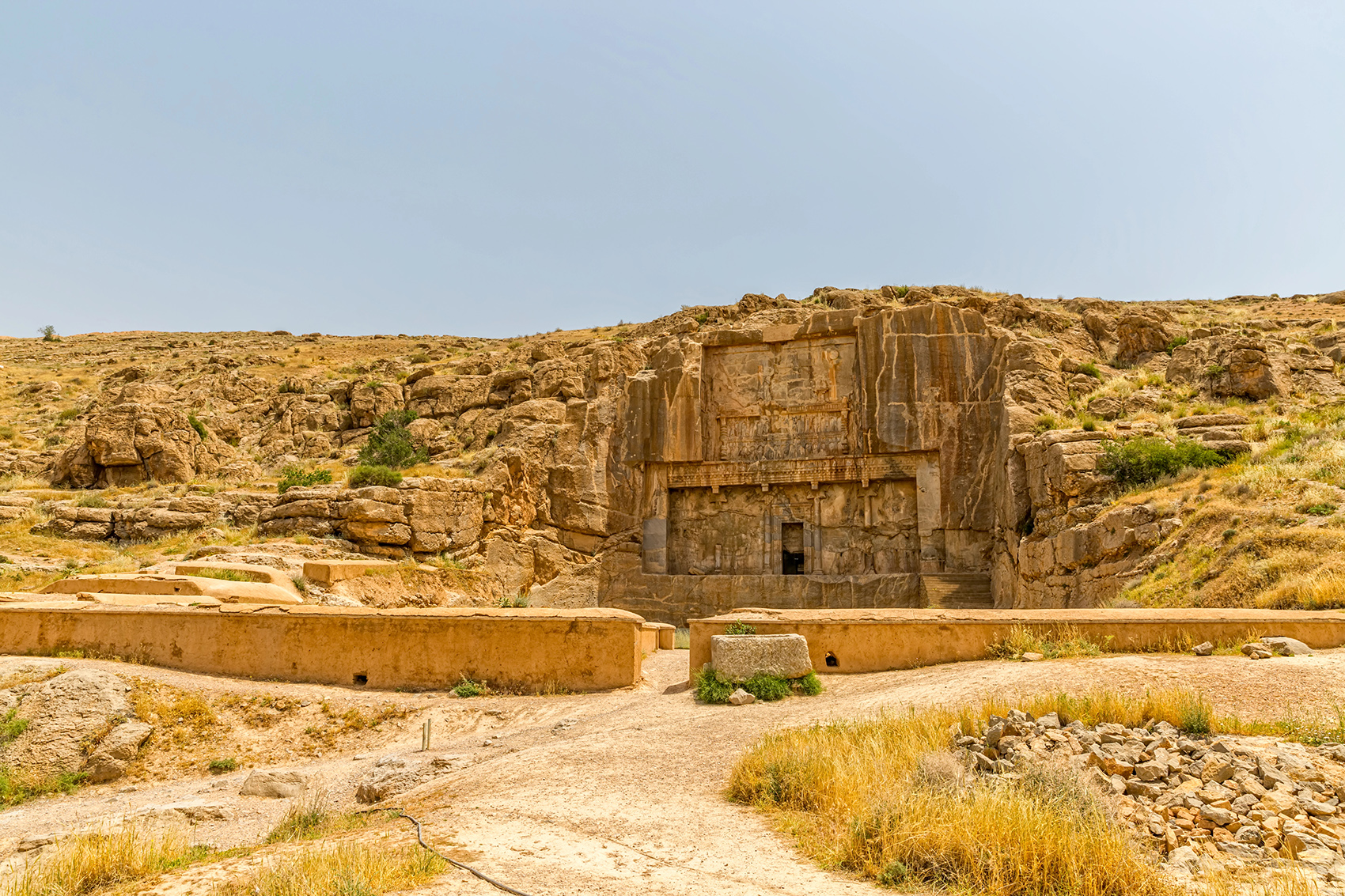
Centuries later, Achaemenid Persian rulers created monumental royal tomb façades in cliffs such as Naqsh-e Rostam. In southwestern Anatolia, Lycian builders carved tombs that could resemble houses or small temples.
None of this means that Petra simply copied one earlier site. It demonstrates something more useful: by the time the Nabataeans developed their monumental architecture, the idea of turning a cliff face into architecture already had a long history across the wider region.
See the rock-cut monuments that existed before Petra
Reference: UNESCO World Heritage Centre — Nubian Monuments from Abu Simbel to Philae
Follow the Trade Routes
The geographic pattern raises another intriguing question. Many of these monuments appeared in regions connected to important routes of commerce, travel, pilgrimage or imperial communication.
Petra and Hegra provide the strongest example. The Nabataean world occupied strategic territory along routes connecting Arabia with Mediterranean markets. Petra became a major caravan center associated with the movement of incense, spices and luxury goods.
But trade routes moved more than merchandise. They also moved people and ideas: craftsmen, merchants, diplomats, religious travelers, decorative motifs, technologies and expectations about what prestigious architecture should look like.
That does not mean every rock-cut monument on an ancient trade corridor descended from the same architectural tradition. Rather, trade provides one mechanism by which ideas could travel between otherwise distant cultures.
Follow the ancient routes that moved goods, people and ideas
Reference: UNESCO World Heritage Centre — Petra
A Map Changes the Question
On a modern map, Petra, Hegra, Abu Simbel, Lycia, Persia and India's great rock-cut sites seem widely separated. On a map emphasizing ancient routes, however, another picture begins to emerge.
The eastern Mediterranean connected with Egypt and the Levant. Arabia connected northward through caravan routes. Persian imperial and commercial corridors reached across western Asia. Maritime and overland networks ultimately connected these regions with India.
The map does not prove that one civilization taught another how to carve architecture from rock. What it does demonstrate is that many of these cultures were far less isolated from one another than their modern national boundaries might suggest.
Map credit: [Map creator / source information]
Stock photograph credit: MazurTravel / DepositPhotos.com
When Carving Into Rock Became Carving a Building Out of Rock
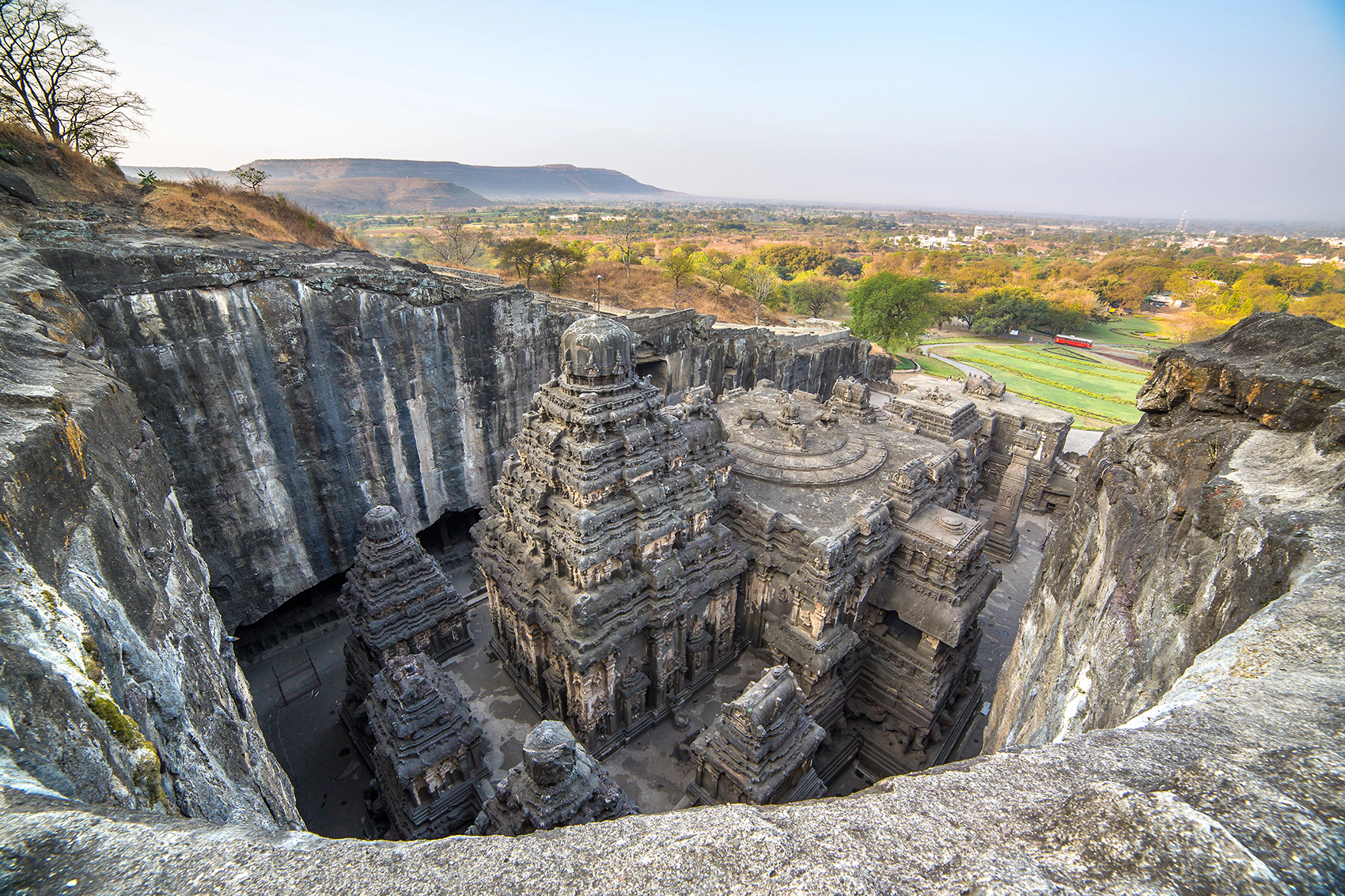
India's rock-cut monuments introduce a different architectural idea. At Ajanta, builders excavated elaborate halls, sanctuaries, columns and architectural interiors directly within the cliff.
Ellora pushed subtractive architecture still farther. At the extraordinary Kailasa Temple, workers removed immense amounts of basalt while leaving the architectural mass of the temple behind.
Petra often presents the viewer with a monumental architectural façade carved into a cliff with chambers behind it. Kailasa invites us to imagine almost the reverse:
start with the rock, then remove everything that is not the building.
Explore Ajanta, Ellora and architecture by subtraction
Reference: UNESCO World Heritage Centre — Ellora Caves
What If the Landscape Itself Became Architecture?
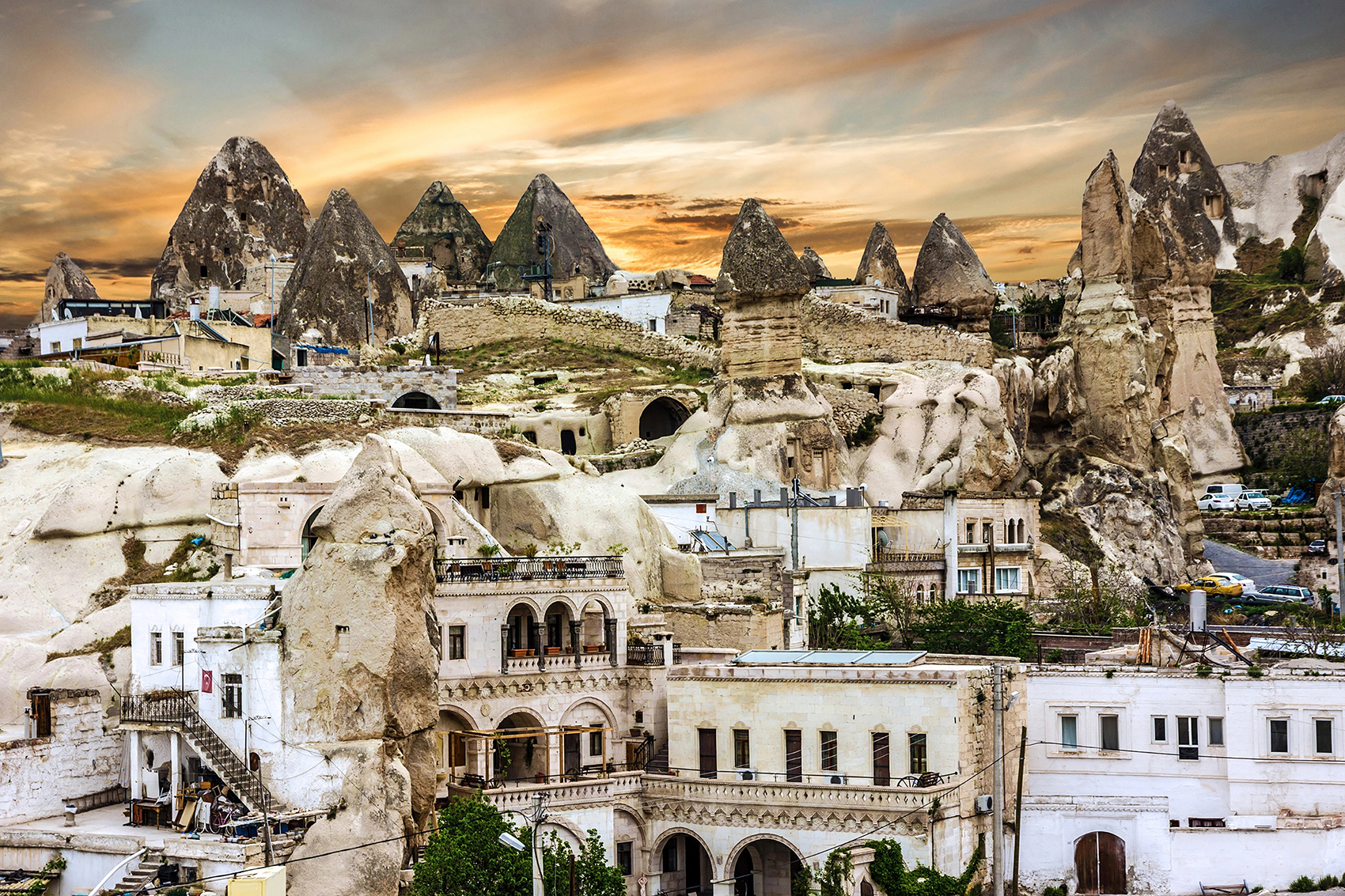
Cappadocia expands the story beyond monumental tombs and temples. In the soft volcanic landscape of central Turkey, people carved churches, monasteries, dwellings and other spaces directly into the rock.
The comparison is useful precisely because Cappadocia is not another Petra. It shows how rock-cut construction can become part of an entire inhabited landscape rather than a technique reserved for elite tombs or monumental sanctuaries.
Similar construction methods can therefore arise for very different reasons: geology, defense, religion, climate, available materials and local building traditions can all influence the decision to excavate rather than construct.
Explore Cappadocia's rock-cut landscape
Reference: UNESCO World Heritage Centre — Göreme National Park and the Rock Sites of Cappadocia
Stock photograph credit: TravelFaery / DepositPhotos.com
Stock photograph credit: [Photographer / Stock Agency]
How Old Would You Guess This Is?
Lalibela can easily create the impression that we are looking at another monument from the distant ancient world.
We are not.
Ethiopia's celebrated rock-hewn churches belong principally to the medieval Christian world. They are associated with the creation of a symbolic "New Jerusalem" and were produced more than a thousand years after Petra's great Nabataean period.
That chronological surprise illustrates one of the central lessons of this entire series:
buildings that look related are not necessarily close in age—or even historically related at all.
Discover why Lalibela is much younger than it looks
Reference: UNESCO World Heritage Centre — Rock-Hewn Churches, Lalibela
Coincidence or Connection?
Once these sites are placed on the same timeline and map, their similarities become more interesting—but also more complicated.
Definitely Connected
Petra and Hegra. Both belonged to the Nabataean world. Their similarities are not merely visual speculation.
Part of an Interconnected Ancient World
The rock-cut traditions of Egypt, Persia, Anatolia and the Hellenistic Near East existed within regions that traded, fought, migrated and exchanged ideas over many centuries. Architectural influence is possible and sometimes probable, but the evidence does not justify treating every similar façade as a direct copy of an earlier one.
Connected by Wider Networks, but Architecturally Distinct
India's Buddhist, Hindu and Jain rock-cut traditions developed their own extraordinary architectural language. Trade and religious networks helped connect regions and patrons, but Ajanta and Ellora should not be presented simply as descendants of Petra.
Similar Solution, Different Time and Culture
Cappadocia and Lalibela remind us that civilizations separated by centuries can independently exploit suitable geology in remarkably creative ways.
The more satisfying conclusion is therefore not that one forgotten civilization spread a secret technique around the ancient world. Instead, the evidence reveals something richer:
Some of these builders were directly connected. Others lived within networks through which ideas could travel. Still others independently discovered that a mountain could be more than a place on which to put a building—it could become the raw material from which the building itself was created.
Explore the Ancient History Intrigues Series
- Ancient Cities Carved from Stone: Were They Connected? — This introductory hub.
- Petra: A City Carved at the Crossroads of the Ancient World
- Petra and Hegra: Two Cities of the Same Nabataean World
- Before Petra: Ancient Civilizations Were Already Carving Mountains
- The Ancient Highways That Connected These Worlds
- From Petra to India: Architecture by Subtraction
- Cappadocia: When an Entire Landscape Became Architecture
- Lalibela: Ancient Looking, but More Than a Thousand Years Younger Than Petra
- Coincidence or Connection? Why Ancient Rock-Cut Buildings Look Alike
Explore Further
These authoritative resources provide useful starting points for readers who would like to go beyond this introductory exploration.
- UNESCO World Heritage Centre — Petra
- UNESCO World Heritage Centre — Hegra Archaeological Site
- UNESCO World Heritage Centre — Nubian Monuments from Abu Simbel to Philae
- UNESCO World Heritage Centre — Ajanta Caves
- UNESCO World Heritage Centre — Ellora Caves
- UNESCO World Heritage Centre — Göreme National Park and the Rock Sites of Cappadocia
- UNESCO World Heritage Centre — Rock-Hewn Churches, Lalibela